Deploy with RockPi

Connecting OAK devices to RockPi single-board computers (SBCs) brings AI vision capabilities to low-cost, high-performance platforms. To install the DepthAI library on a RockPi device, follow these steps to install dependencies and the library itself through pip. Prebuilt wheels for various platforms can be checked on PyPi.

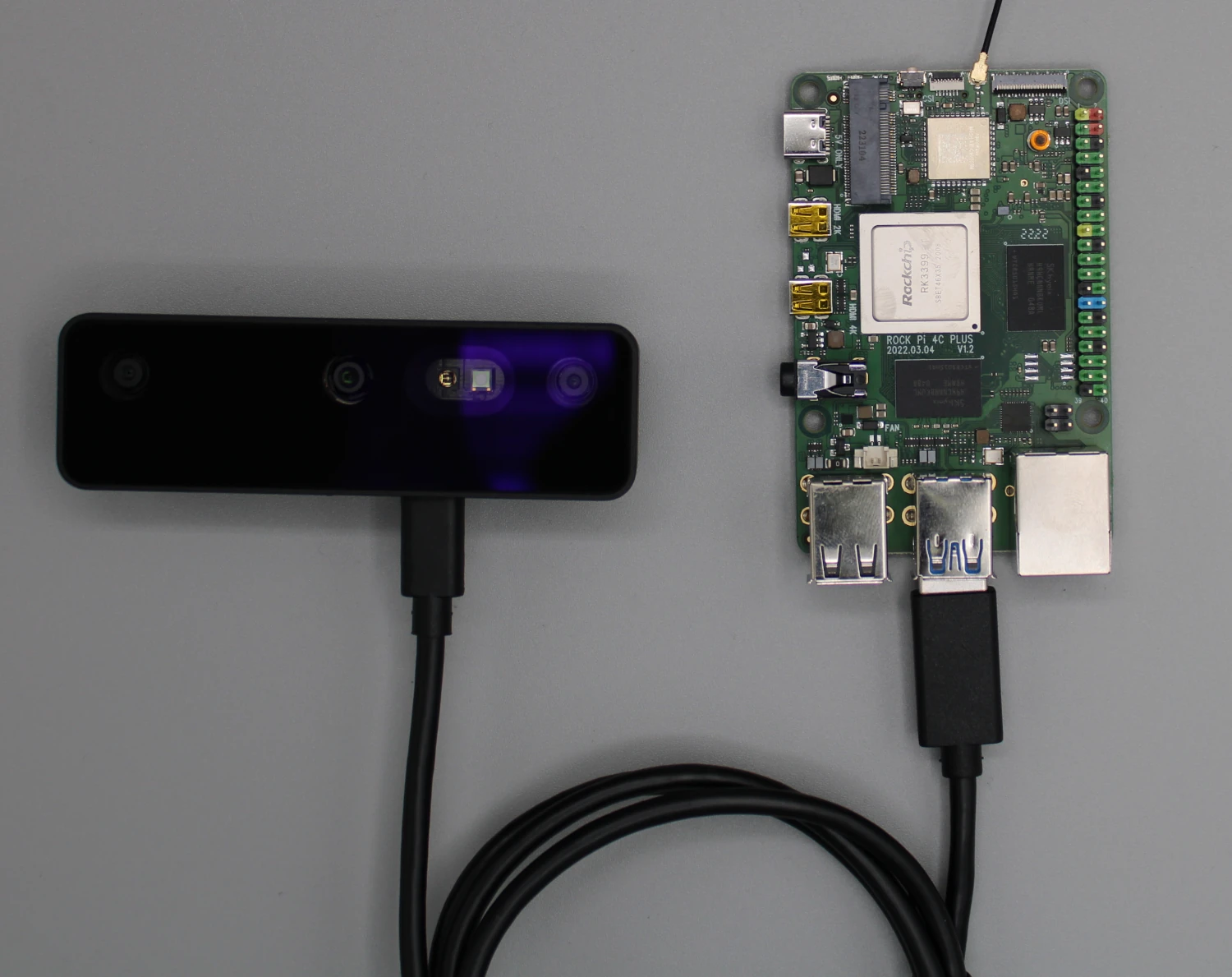
RockPi 4

RockPi 4

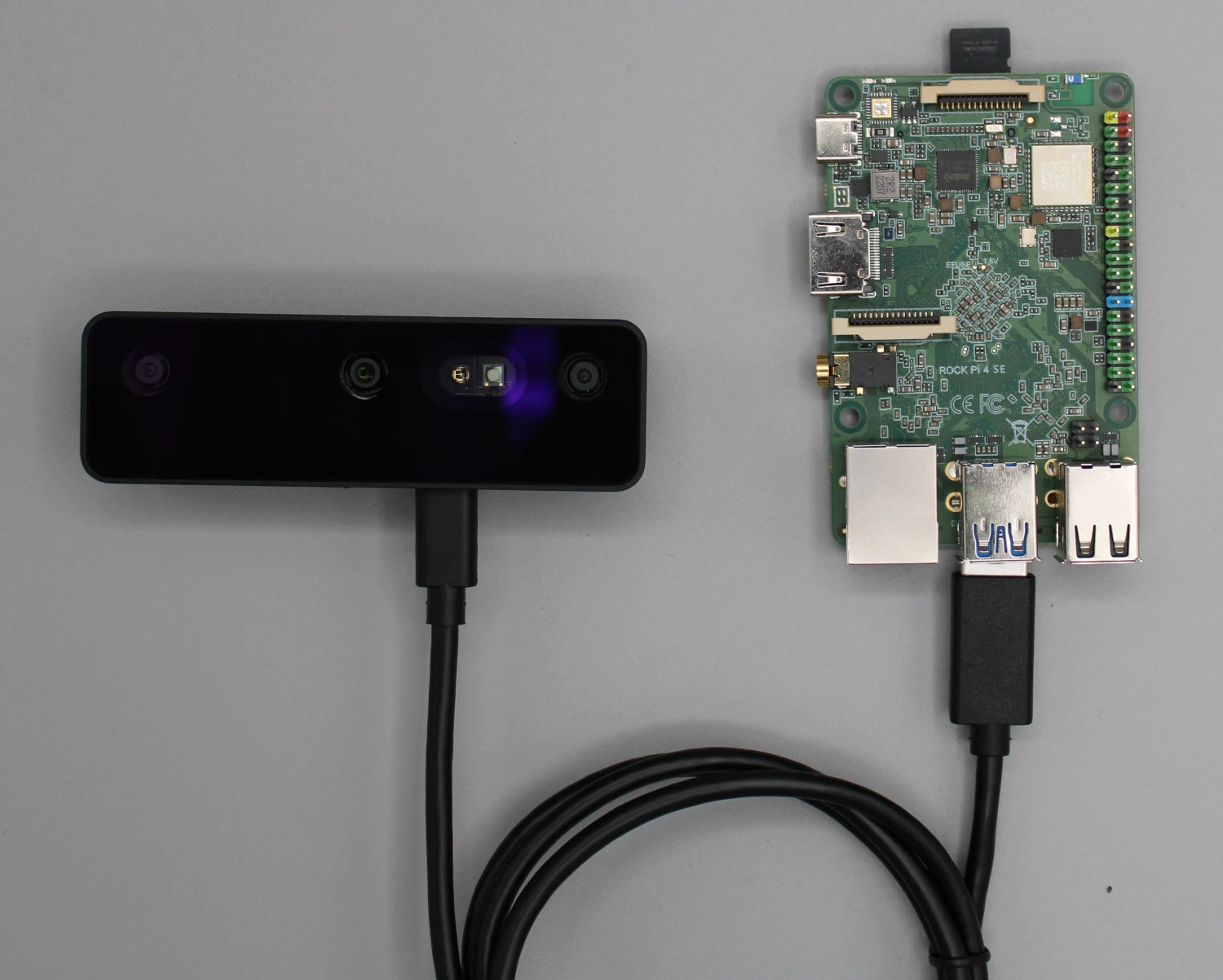
RockPi 4 SE

RockPi 4

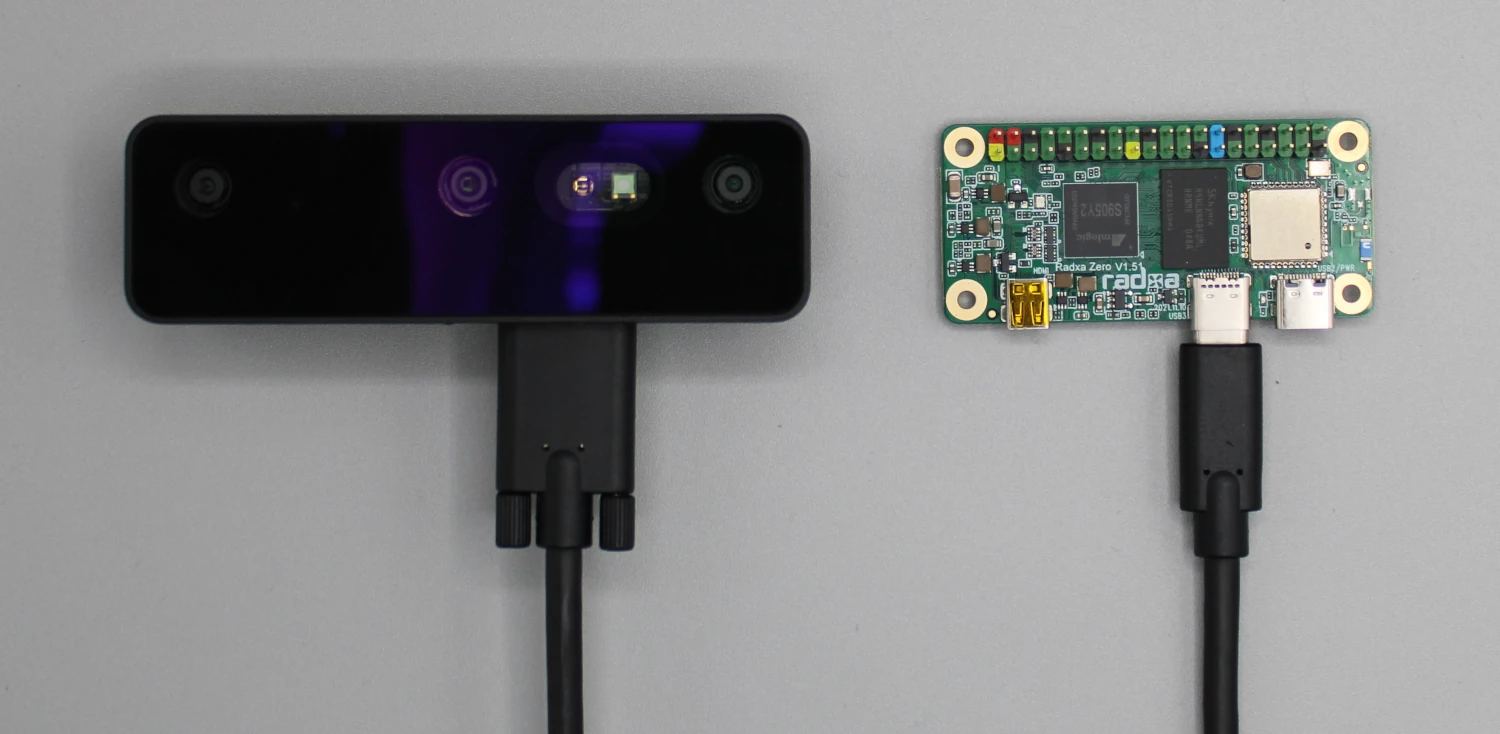
Radxa Zero

RockPi 4

Radxa Zero

Installing DepthAI on Radxa Zero

To install DepthAI on Radxa Zero, which are based on the Amlogic S905Y2 processor, you can follow the steps below.Currently tested OS versions include:
  • Armbian Focal (desktop)
  • Armbian Focal (minimal, X11 needs further setup)
You will have to first run through initial setup steps (setting password, timezone, etc.). Once the OS is set up, you can proceed with the following steps to install DepthAI.
Since Radxa Zero does not have an Ethernet port, you will need to connect to WiFi to download and install the necessary packages. You can use the following command to connect to a WiFi network:
Command Line
1nmcli d wifi connect "your_wifi_ssid" password "your_wifi_password"
Open a terminal window and run the following commands to update your system:
Command Line
1sudo apt update && sudo apt upgrade
Install the DepthAI dependencies:
Command Line
1sudo wget -qO- https://docs.luxonis.com/install_dependencies.sh | bash
This script should handle most dependency installations. Double-check for any Radxa Zero dependencies if this script fails.
It's a good practice to use a Python virtual environment:
Command Line
1sudo apt install python3-venv
2python3 -m venv depthai-env
3source depthai-env/bin/activate
Ensure you activate the virtual environment before proceeding with the DepthAI installation.
Clone the DepthAI repository and install the library
Command Line
1#Clone github repository
2git clone https://github.com/luxonis/depthai-python.git
3cd depthai-python
4python3 examples/install_requirements.py
Last step is to edit .bashrc with the line:
Command Line
1echo "export OPENBLAS_CORETYPE=ARMV8" >> ~/.bashrc

Power Considerations for OAK on Radxa Zero

Make sure to use a Y-adapter to power the OAK device. The Radxa Zero may not be able to provide enough power to the OAK device through a single USB port.

Connecting to Radxa Zero Remotely

Similar to other SBCs, you can connect to your Radxa Zero remotely via SSH for headless operation:
Command Line
1ssh username@radxa_ip_address
Ensure that SSH is enabled on your Radxa. The process for enabling SSH may vary slightly depending on the specific OS version you are using.For graphical applications or to display GUI elements from your RockPi to a local machine, X11 forwarding can be used with the -X flag:
Command Line
1ssh -X username@radxa_ip_address

RockPi 4

Installing DepthAI on RockPi 4

To install DepthAI on RockPi 4, you can follow the steps below.Currently tested OS versions include:
  • Ubuntu Server (20.04)
  • Debian 11 Desktop
Open a terminal window and run the following commands to update your system:
Command Line
1sudo apt update && sudo apt upgrade
Install the DepthAI dependencies:
Command Line
1sudo wget -qO- https://docs.luxonis.com/install_dependencies.sh | bash
This script should handle most dependency installations. Double-check for any RockPi-specific dependencies if this script fails.
It's a good practice to use a Python virtual environment:
Command Line
1sudo apt install python3-venv
2python3 -m venv depthai-env
3source depthai-env/bin/activate
Ensure you activate the virtual environment before proceeding with the DepthAI installation.
Clone the DepthAI repository and install the library
Command Line
1git clone https://github.com/luxonis/depthai-python.git
2cd depthai-python
3python3 examples/install_requirements.py
Last step is to edit .bashrc with the line:
Command Line
1echo "export OPENBLAS_CORETYPE=ARMV8" >> ~/.bashrc

Power Considerations for OAK on RockPi

While RockPi devices are generally capable of powering OAK cameras directly via USB, it's wise to monitor the power draw, especially when connecting multiple peripherals. For high-power OAK devices or multiple USB devices, consider an externally powered USB hub or specific power arrangements recommended by OAK documentation.

Connecting to RockPi Remotely

Similar to other SBCs, you can connect to your RockPi remotely via SSH for headless operation:
Command Line
1ssh username@rockpi_ip_address
Ensure that SSH is enabled on your RockPi. The process for enabling SSH may vary slightly depending on the specific OS version you are using.For graphical applications or to display GUI elements from your RockPi to a local machine, X11 forwarding can be used with the -X flag:
Command Line
1ssh -X username@rockpi_ip_address
If using Debian 11 Desktop, you can also use VNC for full graphical desktop access:Or, set up VNC for full graphical desktop access:
  • Install a VNC server on your RockPi.
  • Enable and configure the VNC server.
  • Connect using a VNC client from another computer.

RockPi 4 SE

Installing DepthAI on RockPi 4 SE

To install DepthAI on RockPi 4 SE, you can follow the steps below.Currently tested OS versions include:
  • Ubuntu Server (20.04)
  • Debian 11 Desktop
Open a terminal window and run the following commands to update your system:
Command Line
1sudo apt update && sudo apt upgrade
Install the DepthAI dependencies:
Command Line
1sudo wget -qO- https://docs.luxonis.com/install_dependencies.sh | bash
This script should handle most dependency installations. Double-check for any RockPi-specific dependencies if this script fails.
It's a good practice to use a Python virtual environment:
Command Line
1sudo apt install python3-venv
2python3 -m venv depthai-env
3source depthai-env/bin/activate
Ensure you activate the virtual environment before proceeding with the DepthAI installation.
Clone the DepthAI repository and install the library
Command Line
1#Clone github repository
2git clone https://github.com/luxonis/depthai-python.git
3cd depthai-python
4python3 examples/install_requirements.py
Last step is to edit .bashrc with the line:
Command Line
1echo "export OPENBLAS_CORETYPE=ARMV8" >> ~/.bashrc

Power Considerations for OAK on RockPi

While RockPi devices are generally capable of powering OAK cameras directly via USB, it's wise to monitor the power draw, especially when connecting multiple peripherals. For high-power OAK devices or multiple USB devices, consider an externally powered USB hub or specific power arrangements recommended by OAK documentation.

Connecting to RockPi Remotely

Similar to other SBCs, you can connect to your RockPi remotely via SSH for headless operation:
Command Line
1ssh username@rockpi_ip_address
Ensure that SSH is enabled on your RockPi. The process for enabling SSH may vary slightly depending on the specific OS version you are using.For graphical applications or to display GUI elements from your RockPi to a local machine, X11 forwarding can be used with the -X flag:
Command Line
1ssh -X username@rockpi_ip_address
If using Debian 11 Desktop, you can also use VNC for full graphical desktop access:Or, set up VNC for full graphical desktop access:
  • Install a VNC server on your RockPi.
  • Enable and configure the VNC server.
  • Connect using a VNC client from another computer.