此页面由 AI 自动翻译。查看英文原版
DepthAI
软件栈

本页目录

  • 源代码

神经辅助立体

Supported on:RVC4
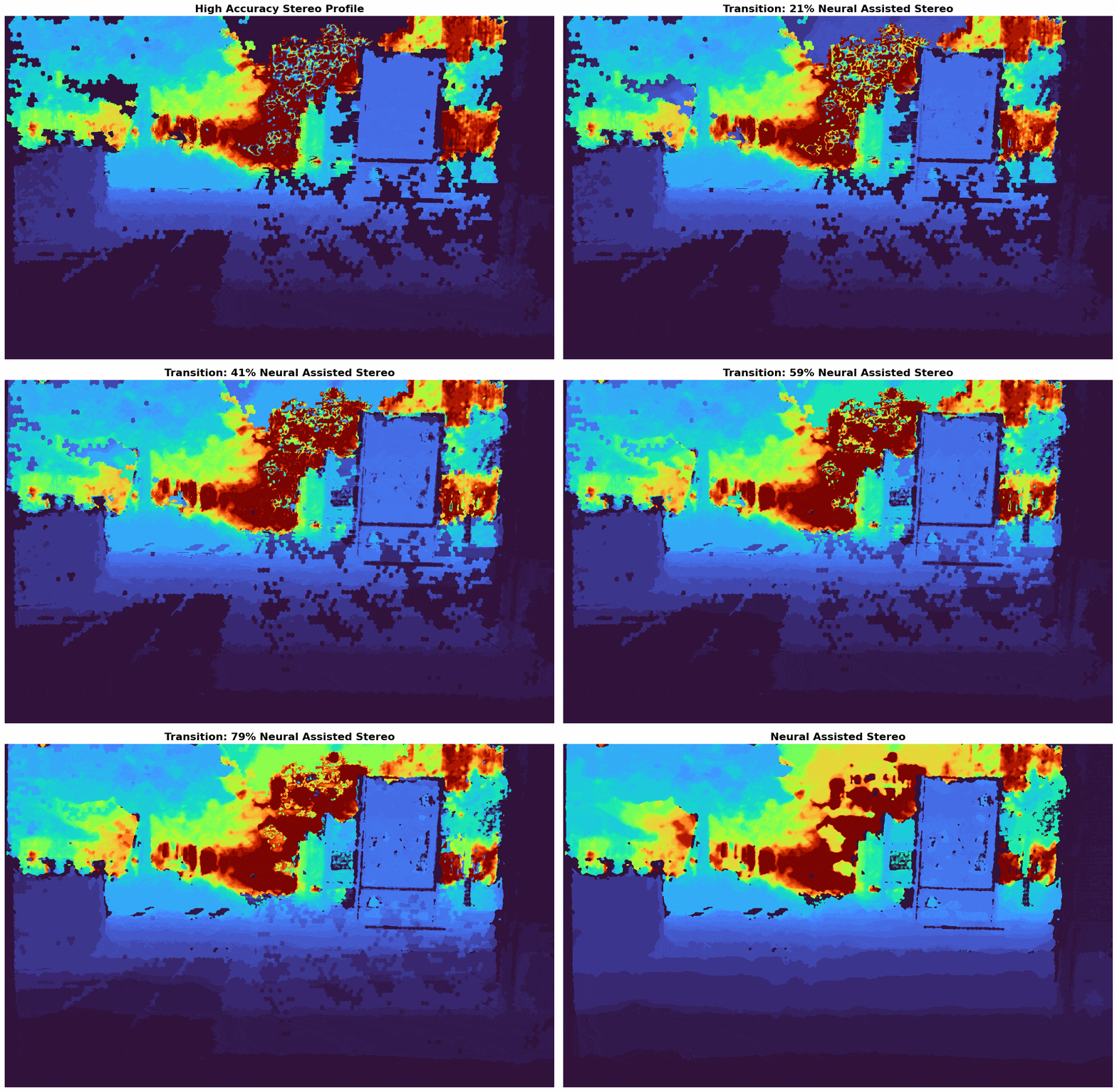
本示例演示了 NeuralAssistedStereo 节点,该节点融合了 NeuralDepth 和传统的 StereoDepth
此示例需要 DepthAI v3 API,请参阅 安装说明

源代码

Python

Python
GitHub
1import numpy as np
2import cv2 as cv
3import depthai as dai
4
5FPS = 20
6
7def showDepth(depthFrame, windowName="Depth", minDistance=500, maxDistance=5000,
8               colormap=cv.COLORMAP_TURBO, useLog=False):
9    """
10    Nicely visualize a depth map.
11
12    Args:
13        depthFrame (np.ndarray): Depth frame (in millimeters).
14        windowName (str): OpenCV window name.
15        minDistance (int): Minimum depth to display (in mm).
16        maxDistance (int): Maximum depth to display (in mm).
17        colormap (int): OpenCV colormap (e.g., cv.COLORMAP_JET, COLORMAP_TURBO, etc.).
18        useLog (bool): Apply logarithmic scaling for better visual contrast.
19
20    Example:
21        frame = depth.getCvFrame()
22        showDepth(frame)
23    """
24    # Convert to float for processing
25    depthFrame = depthFrame.astype(np.float32)
26
27    # Optionally apply log scaling
28    if useLog:
29        depthFrame = np.log(depthFrame + 1)
30
31    # Clip to defined range (avoid far-out values)
32    depthFrame = np.uint8(np.clip(depthFrame, minDistance, maxDistance) / maxDistance * 255)
33
34    # Apply color map
35    depthColor = cv.applyColorMap(depthFrame, colormap)
36
37    # Show in a window
38    cv.imshow(windowName, depthColor)
39
40if __name__ == "__main__":
41    device = dai.Device()
42    pipeline = dai.Pipeline(device)
43    if not device.isNeuralDepthSupported():
44        print("Exiting NeuralAssistedStereo example: device doesn't support NeuralDepth.")
45        exit()
46
47    monoLeft = pipeline.create(dai.node.Camera).build(dai.CameraBoardSocket.CAM_B, sensorFps=FPS)
48    monoRight = pipeline.create(dai.node.Camera).build(dai.CameraBoardSocket.CAM_C, sensorFps=FPS)
49
50    monoLeftOut = monoLeft.requestFullResolutionOutput()
51    monoRightOut = monoRight.requestFullResolutionOutput()
52
53    neuralAssistedStereo = pipeline.create(dai.node.NeuralAssistedStereo).build(monoLeftOut, monoRightOut, neuralModel=dai.DeviceModelZoo.NEURAL_DEPTH_NANO)
54
55    disparityQueue = neuralAssistedStereo.disparity.createOutputQueue()
56
57    with pipeline:
58        pipeline.start()
59        while pipeline.isRunning():
60            disparity = disparityQueue.get()
61            showDepth(disparity.getCvFrame(), minDistance=100, maxDistance=6000, useLog=False)
62
63            key = cv.waitKey(1)
64            if key == ord('q'):
65                quit()

C++

1#include <depthai/depthai.hpp>
2#include <depthai/device/Device.hpp>
3#include <depthai/pipeline/node/Camera.hpp>
4#include <depthai/pipeline/node/NeuralAssistedStereo.hpp>
5#include <iostream>
6#include <opencv2/opencv.hpp>
7
8constexpr float FPS = 20.0f;
9// Nicely visualize a depth map.
10// The input depthFrame is assumed to be the raw disparity (CV_16UC1 or similar)
11// received from the DepthAI pipeline.
12void showDepth(const cv::Mat& depthFrameIn,
13               const std::string& windowName = "Depth",
14               int minDistance = 500,
15               int maxDistance = 5000,
16               int colormap = cv::COLORMAP_TURBO,
17               bool useLog = false) {
18    cv::Mat depthFrame = depthFrameIn.clone();
19
20    cv::Mat floatFrame;
21    depthFrame.convertTo(floatFrame, CV_32FC1);
22
23    // # Optionally apply log scaling
24    if(useLog) {
25        // depthFrame = np.log(depthFrame + 1)
26        cv::log(floatFrame + 1, floatFrame);
27    }
28
29    cv::Mat upperClamped;
30    cv::min(floatFrame, maxDistance, upperClamped);
31
32    cv::Mat clippedFrame;
33    cv::max(upperClamped, minDistance, clippedFrame);
34
35    double alpha = 255.0 / maxDistance;
36    clippedFrame.convertTo(clippedFrame, CV_8U, alpha);
37
38    cv::Mat depthColor;
39    cv::applyColorMap(clippedFrame, depthColor, colormap);
40
41    cv::imshow(windowName, depthColor);
42}
43
44int main() {
45    // 1. Create device and pipeline
46    auto device = std::make_shared<dai::Device>();
47    dai::Pipeline pipeline(device);
48    if(!device->isNeuralDepthSupported()) {
49        std::cout << "Exiting NeuralAssistedStereo example: device doesn't support NeuralDepth.\n";
50        return 0;
51    }
52
53    // 2. Define nodes
54    auto monoLeft = pipeline.create<dai::node::Camera>()->build(dai::CameraBoardSocket::CAM_B, std::nullopt, FPS);
55    auto monoRight = pipeline.create<dai::node::Camera>()->build(dai::CameraBoardSocket::CAM_C, std::nullopt, FPS);
56    auto monoRightOut = monoRight->requestFullResolutionOutput();
57    auto monoLeftOut = monoLeft->requestFullResolutionOutput();
58
59    auto neuralAssistedStereo = pipeline.create<dai::node::NeuralAssistedStereo>()->build(*monoLeftOut, *monoRightOut, dai::DeviceModelZoo::NEURAL_DEPTH_NANO);
60
61    // 6. Get output queue
62    auto disparityQueue = neuralAssistedStereo->disparity.createOutputQueue();
63
64    pipeline.start();
65    while(pipeline.isRunning()) {
66        auto disparityPacket = disparityQueue->get<dai::ImgFrame>();
67        showDepth(disparityPacket->getCvFrame(), "Depth", 100, 6000, cv::COLORMAP_TURBO, false);
68        int key = cv::waitKey(1);
69        if(key == 'q') {
70            break;
71        }
72    }
73    return 0;
74}

需要帮助?

请前往 Discussion Forum 获取技术支持或提出您可能有的任何其他问题。